
Business
When the Plan Doesn’t Fly
What a ground stop reveals about reliability in the airline industry.
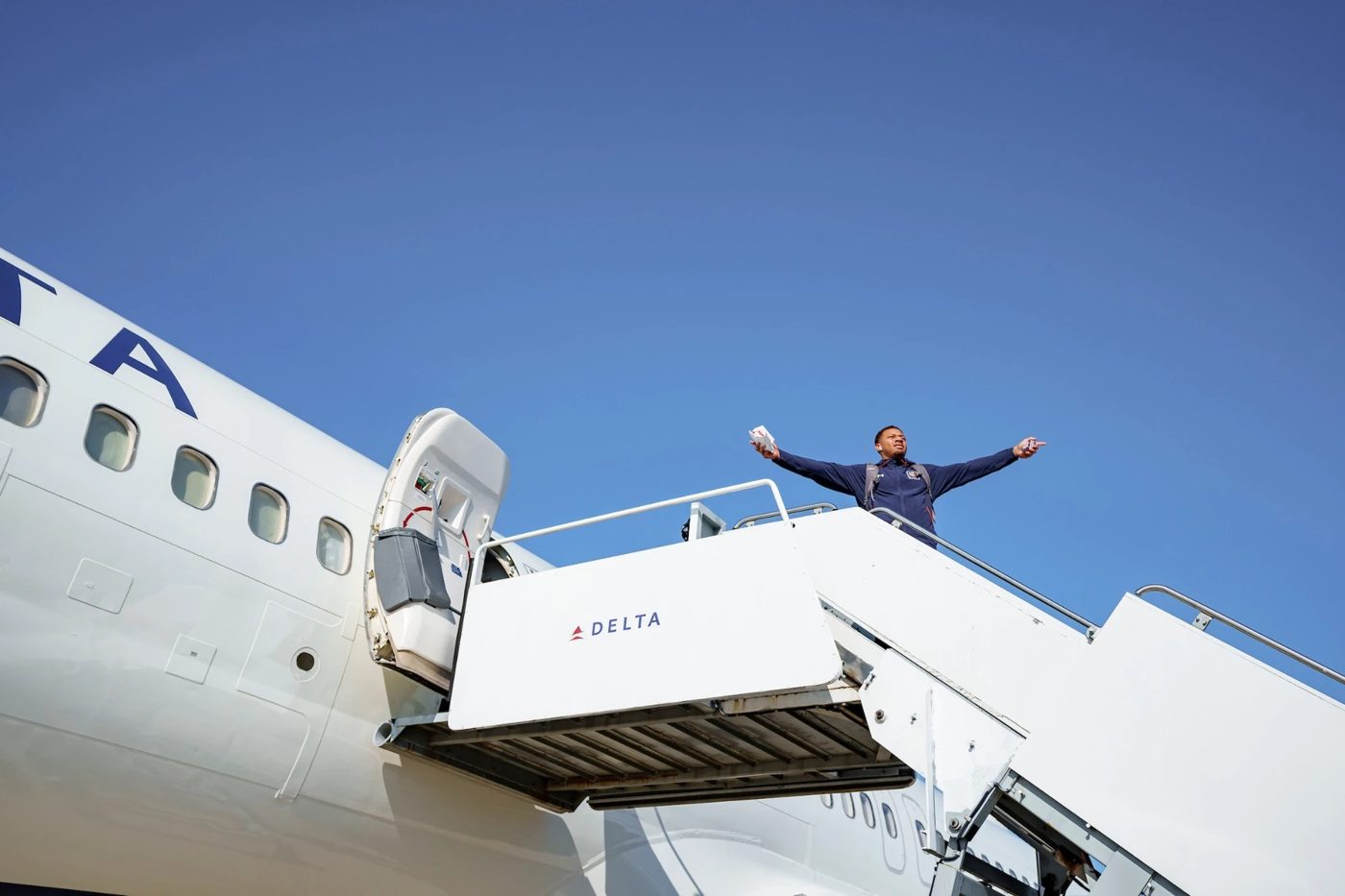
Photo source: Auburn Athletics
On Friday afternoon, Auburn University’s football team was supposed to be on its way to Mississippi State for a Saturday morning game. Instead, the Tigers found themselves caught in the middle of a nationwide FAA ground stop. The team was preparing to take off from Columbus, Georgia, when the order came down. Its original flight was no longer an option, so the players and staff got off the plane and boarded buses for the drive to Mississippi. Auburn eventually reached its hotel in Tupelo late Friday night. The SEC also pushed the next day’s kickoff from 11 a.m. to 3:15 p.m. The Tigers made it to the game and went on to win 41-9. For Auburn, the disruption meant a longer trip and a delayed Saturday. Across the airline industry, the same event created a much larger challenge. Thousands of flights were delayed or canceled, and airlines had to work through the operational consequences long after the ground stop ended.
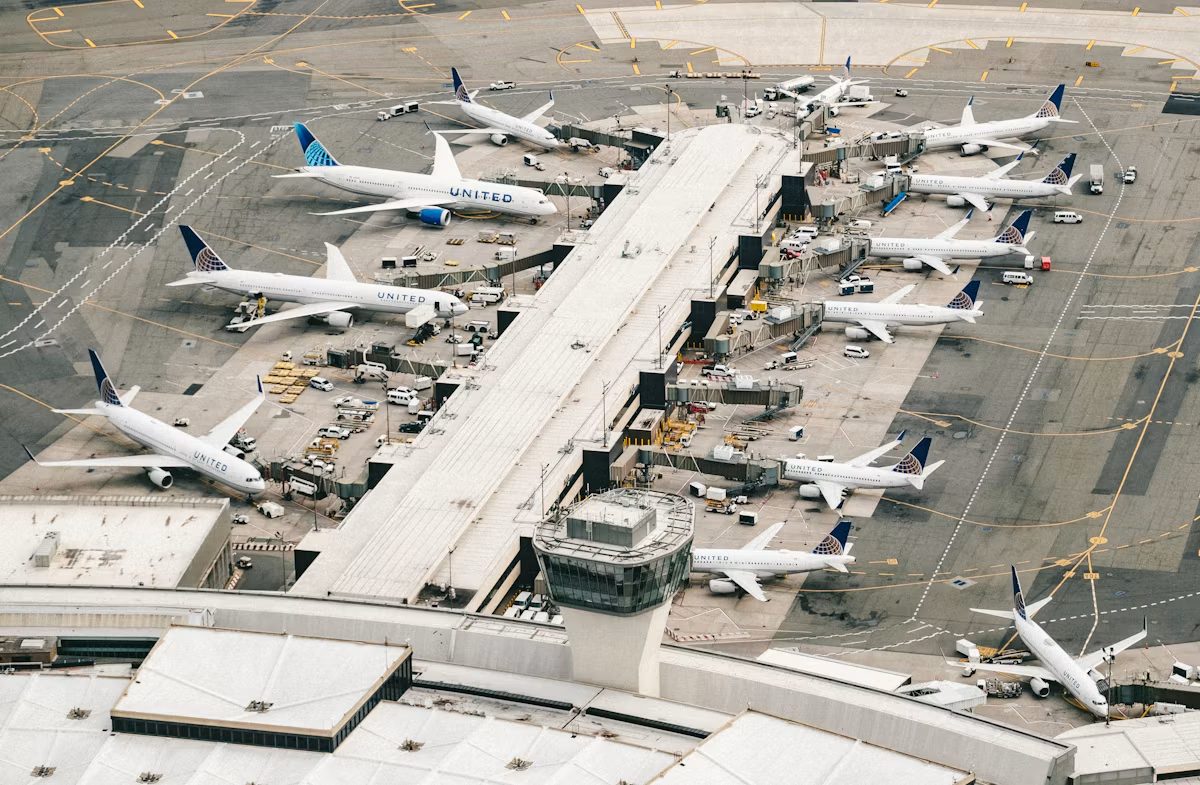
The difference comes down to the scale and complexity of the operation. Airlines are, in essence, enormous moving networks. Every aircraft, crew, gate, and departure time depends on several other pieces of the operation falling into place. A plane that lands in Chicago might be scheduled to fly to Boston next, then Atlanta, then somewhere else. The crew has its own schedule, and the airport needs the space and staff to handle each arrival and departure. These pieces operate together throughout the day, meaning a delay in one place can affect flights hundreds of miles away. The FAA’s November 13 ground stop offers a useful case study in how businesses balance efficiency with reliability, why disruptions can spread far beyond their original cause, and why maintaining the capacity to recover from unexpected problems has real economic value.
Source: Unsplash
The Business of Keeping Planes Moving
Airlines have strong financial incentives to keep their aircraft moving. Planes are expensive assets, and time spent sitting on the ground generally does not generate revenue. Airlines therefore try to maximize aircraft utilization, or the amount of time each plane spends in productive service, while minimizing the time it spends waiting between flights. Southwest Airlines offers a useful example. In its 2025 annual report, the company explains that its use of less congested airports helps it schedule aircraft with less ground time, reducing the number of aircraft and gates needed to operate its network. Southwest also describes efforts to shorten aircraft turnaround times, the period between one flight’s arrival and its next departure. In 2025, the company introduced overnight flights and reduced aircraft turnaround times as part of its efforts to increase utilization. These strategies allow airlines to serve more passengers with the resources they already have.
This emphasis on efficiency makes sense. Airlines face substantial costs from aircraft ownership, fuel, labor, maintenance, and airport operations. Leaving planes idle or building excessive time between flights means paying for resources that are not producing revenue. A tightly organized schedule allows an airline to get more use out of its fleet and spread its fixed costs across more flights. The strategy also leaves less room to absorb unexpected delays. When aircraft and crews operate on carefully coordinated schedules, one late arrival can affect the next several departures. An airline can run very efficiently under normal conditions while becoming much harder to recover when those conditions change.
Source: W. E. O’Neil
The Cost of Falling Behind
That trade-off became visible during Friday’s ground stop. The FAA issued the nationwide restriction at approximately 3:30 p.m. Eastern after a technical problem disrupted communications and radar feeds used by air traffic controllers. The restriction was lifted at 8:15 p.m., but the end of the ground stop did not immediately return airline schedules to normal. Aircraft had been delayed or diverted, and some were left in locations different from where their schedules required them to be. Crews and passengers were also out of position. Reuters reported that nearly 10,000 flights had been canceled by 11:30 p.m. Friday, with disruptions expected to continue into the following days. The FAA later reported approximately 12,462 cancellations on Friday, while noting that not every cancellation was directly caused by the ground stop. The technical problem had been addressed, but airlines still had to work through the disruption it created.
The financial consequences extend beyond the flight that initially gets delayed. Airlines may have to rebook passengers, pay crews for additional working time, reposition aircraft, and adjust later departures. Canceled flights can also mean lost revenue, particularly when airlines cannot accommodate passengers on another departure. Some carriers may provide hotel accommodations or other assistance, depending on their policies and the circumstances. The precise financial cost of this particular incident to individual airlines remains unclear. Still, the scale of the disruption illustrates how quickly an operational problem can become a financial one. A delay on one route can affect the aircraft and crew scheduled for several later flights, creating costs across an entire day’s operation.
Planning for What Goes Wrong
The incident raises a broader question about how businesses approach efficiency and reliability. Efficiency focuses on getting the most out of available resources while keeping costs low. Reliability focuses on maintaining operations and recovering when something goes wrong. These goals can compete. An airline that schedules every aircraft as tightly as possible may operate at a lower cost on an ordinary day. An airline that leaves additional time between flights or keeps reserve aircraft and crews available may be better prepared for unexpected disruptions. The challenge is determining how much flexibility a business should maintain without sacrificing the efficiency that makes it profitable in the first place.
This question extends well beyond the airline industry. Most businesses rely on infrastructure and services that they do not directly control. Retailers depend on payment networks to process transactions. Manufacturers depend on shipping companies and suppliers to deliver materials. Technology companies depend on data centers and cloud providers to keep their services running. Businesses can manage their own employees, equipment, and operations, but they cannot guarantee that every outside system will work as expected. The FAA incident shows how a failure in one part of a larger network can create consequences for companies that had little control over the original problem.
Of course, maintaining backup capacity is expensive. Extra aircraft, reserve crews, unused inventory, and additional operating time all require resources that could otherwise be put to work. From a short-term efficiency standpoint, unused capacity can look like wasted money. That calculation changes when a disruption occurs. A company that has invested in backup resources may be able to continue operating while competitors struggle to recover. The decision is ultimately a financial one. Businesses must weigh the ongoing cost of maintaining flexibility against the potential losses associated with an interruption. There is no universal answer. The right level of protection depends on the likelihood of a failure, the damage it could cause, and the cost of preparing for it.
The Auburn football team had a relatively simple backup plan. When its flight was grounded, it found another way to Mississippi. Airlines face a much more complicated version of that problem, coordinating thousands of flights across an interconnected network. Efficiency helps airlines control costs and get more out of their aircraft when operations run smoothly. Reliability gives them room to respond when schedules fall apart. For businesses, investing in reliability means accepting some costs today to avoid larger losses when something goes wrong. Sometimes the spare aircraft, extra crew, or unused capacity that looks unnecessary on an ordinary day turns out to be what keeps the business running on a difficult one.