
Macroeconomy
The Numbers of Nor'Easters
Individual storms trigger massive economic damage, the cost of living adjusts to reflect the lack of appreciation for snow, and infrastructure investment skyrockets to endure worsening conditions. A deep dive into the economics of a New England winter.
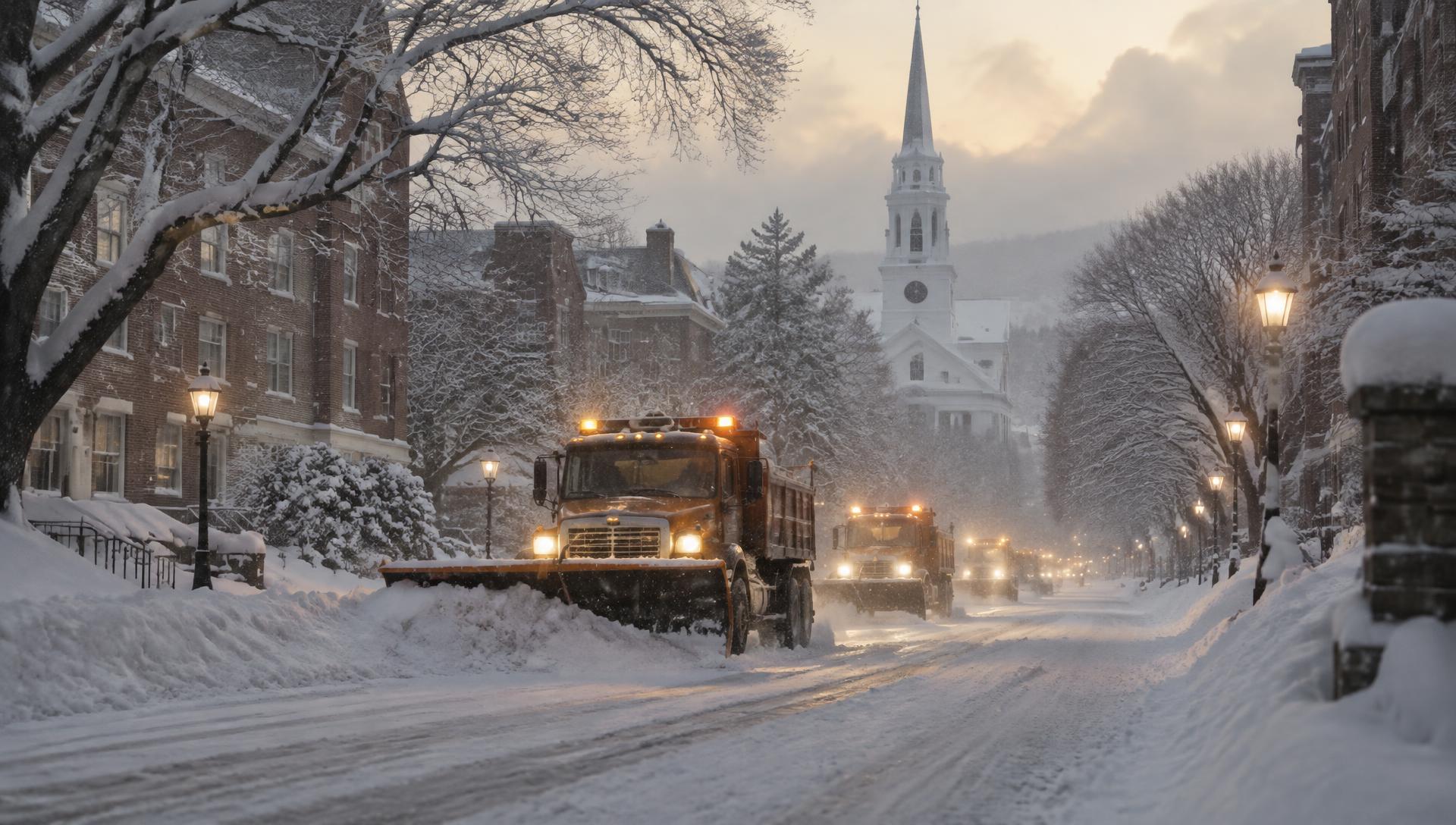
Snow season is on the horizon in Williamstown. As a town that averages 63 inches per year, the students, faculty, and residents are no stranger to big snows. When a foot or more of snow inevitably arrives at some point in the winter, the protocol is simple. In anticipation of the storm, the sidewalks and roads have been salted the night before; the plows are out on the roads before sunrise, making their rounds to wipe away each new inch that falls; and everyone is bundled up with their coats, beanies, and waterproof boots ready to bear the elements. This behavior has been engrained in the hearts and souls of New Englanders. That said, not many stop to question the impacts of these inconveniences beyond their own sanity. The economic impact of the snow season in New England is astounding, with individual storms triggering massive economic damage, the cost of living adjusting to reflect the lack of appreciation for snow, and infrastructure investment skyrocketing to endure worsening conditions. However, like the arrival of spring after winter, a silver lining emerges in all of the economic turmoil. Let's take a deep dive into the numbers of Nor'Easters.
The main separator for the most damaging winter storms in the northeast is what falls out of the sky and not necessarily how much of it. New Englanders are used to the traditional storm that brings big, fluffy dandrites. When the precipitation strays askew of this expectation is when the real trouble begins. Often regarded as the worst winter storm in American history, the 1993 Storm of the Century featured heavy, wet snow from Georgia up through Maine culminating in $12.83 billion in damage in today's dollars. Another storm with a similar snow profile hit closer to home in 1987, when Albany experienced a freak 6.5 inches on October 4. Areas in western Massachusetts and Vermont received well over a foot. The damage from that storm was largely due to the snow weighing down trees that hadn't lost their leaves, leading to 500,000 customers without power. When snow:liquid ratios are far lower than the typical 10:1 (10 inches of snow per 1 inch of rain), the snow becomes denser, weighing 2-3 times more than dryer snow. This means more pressure on buildings and trees and greater difficulty moving the snow with shovels or plows. Alongside wet snow, freezing rain is where you get the real problems. This is the ice that glazes onto surfaces, causing roads to become skating rinks and power lines dominoes.
Freezing rain adds incomprehensible weight to trees and power lines: only 1/3 of an inch weighs 500 pounds. A December 2008 New England ice storm dropped a relatively unremarkable 3/4 inch of liquid precipitation, but because this all fell as freezing rain, the storm produced $5.9 billion in damage. The worst economic damage caused by Nor'easters isn't always in sheer force, it's how the force is applied.
When asked why California is so expensive, former San Diego Padres outfielder Steve Finley claimed, "It's just a very expensive weather tax." He's not wrong. The cost of living in San Diego exceeds the national average by about 50%. The only New England city that comes close to rivaling San Diego is Boston, with the cost of living running about 48% above national average. This is justified by the economic prowess of Boston, with the city boasting thriving industries in education, healthcare, and financial services. Boston's nominal GDP of $610.49 billion nearly doubles San Diego's $314.9 billion. When it comes to other major population centers in New England, San Diego blows them out of the water. Worcester's cost of living runs 18% above national average, with Providence at 10%, and Hartford at 2%. Of course, there are other factors outside of the weather contributing to the cost of living, but a study conducted in 2018 by Paramita Sinha indicates "that households are willing to pay to avoid cold winter temperatures" and the "willingness to pay [is] greater for warmer winters than cooler summers" (Sinha). Winter weather is a double-edged sword. It can be viewed as a hindrance, driving economic development away from New England, but also as a blessing, keeping prices relatively low in cities that would otherwise be extremely desirable.
The public service and infrastructure investment needed to keep society from coming to a halt during paralyzing snowstorms is no small chunk of change. In FY2026, the Massachusetts Department of Transportation (MDOT) allocated $80 million to snow and ice removal. After a particularly oppressive winter with prolonged cold, MDOT requested another $159.8 million to support their efforts. This expense is annually recurring and isn't the only cost borne by New England cities. Heating demand costs New England households roughly $1500 annually. Auto and infrastructure care continues to run up the price, with winter tires costing roughly $1000 for a set of four, oil spray at $200, winter wipers at $50, shovels at $30, snowblowers at $500, and much more. Additionally, to be able to support their extensive snow and ice removal costs, state and local governments sometimes finance debt. Worcester's actual 2025-2026 winter costs doubled their expected total, with the government running a $5 million deficit this past season. In aggregate, New England winters raise the cost of living by approximately 3-7%. Yet, even without these expenses, cost of living in balmy areas constantly outpaces New England because of the aforementioned weather tax. Maybe Steve Finley was onto something.
The economic outlook of New England winters seems pretty grim. Anomalous storms routinely induce billions of dollars of economic loss, residents pay thousands of dollars per winter to finance concerted personal and city-wide efforts to reduce the damage, and people despise the winters so much they pay a serious premium to live elsewhere. With all of these apparent disadvantages, New England has found a redeeming quality of the winters: the skiing and snowboarding industry. While it isn't the powerhouse of an industry that you see in the West, the formidable New England industry generates about $4 billion in economic impact annually. Concerns have risen in recent years about increasing reliance on snowmaking in warmer winters, but any loss of revenue in that regard will be more than offset by temperate winters' decreased burden on the New England economy as a whole.
These numbers become more than statistics when winter hits. They're the ailments of daily life navigating the bitter cold. The scraping sounds of plows at dawn, the extra minutes trudging through a five foot drift, and your aunt declaring she's had enough and is moving to Florida bring their own unique economic costs and benefits. The same snow that raises heating costs and pushes governments into deficits sustains an industry that creates 20,000 jobs each winter in New England. When the snow eventually settles over the Berkshires this year, take a moment to acknowledge its nuance. Defining the culture of a region while simultaneously driving people insane, winter in Williamstown and beyond is far from free.