
Business
Tesla Takes Flight
Tesla just built a car that can fly, and Wall Street barely blinked. That might be exactly the point. What is Tesla’s strategy behind this car?
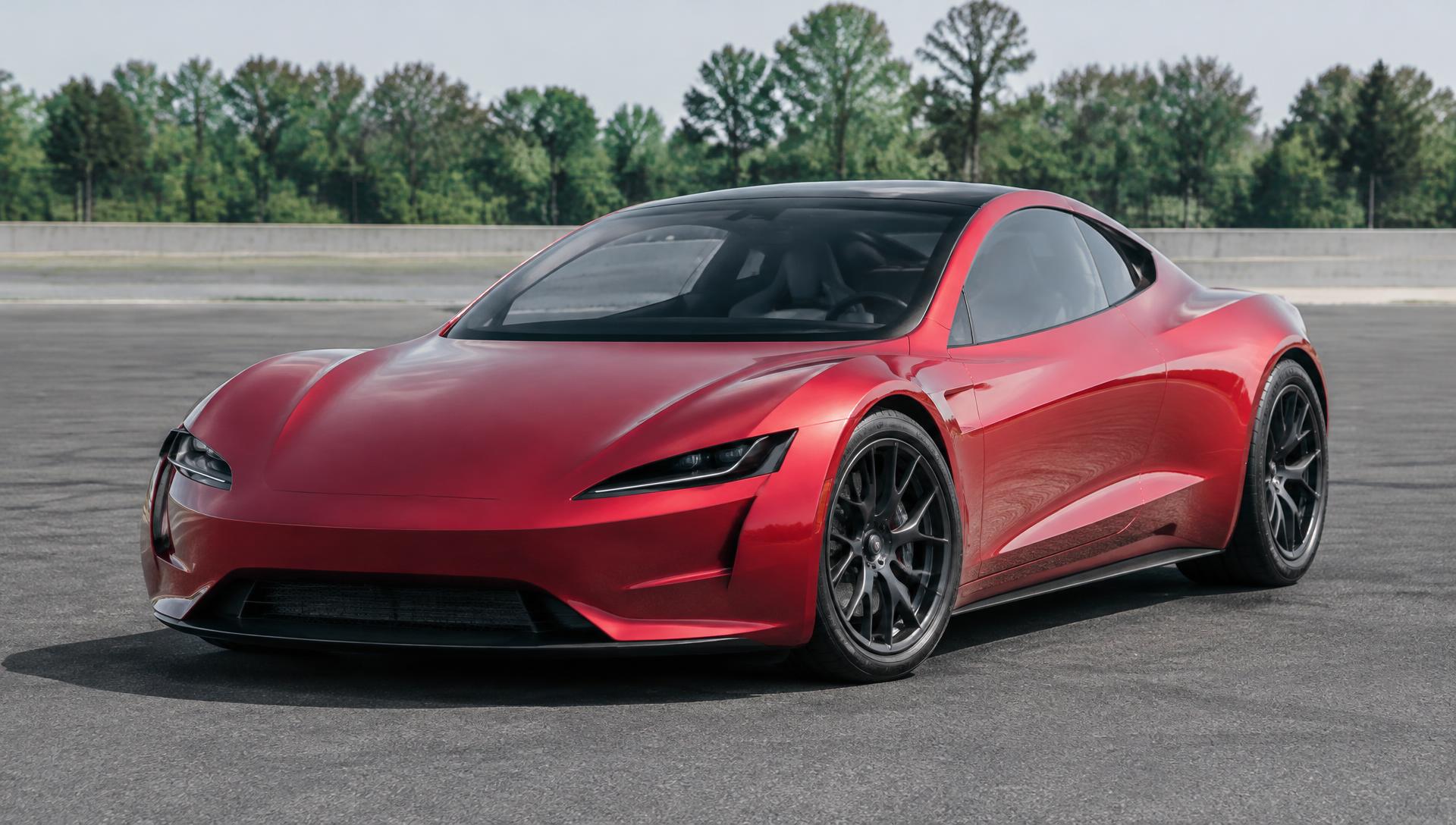
Tesla just built a car that can fly, and Wall Street barely blinked. That might be exactly the point. What is Tesla's strategy behind this car?
On Thursday, October 15th, Tesla revealed the second-generation Roadster at a facility in Waco, Texas. During the demonstration, the car used SpaceX-developed cold-gas thrusters, powered by about 600 liters of compressed air, to drive up an inverted ramp, spin in midair, and hop over a lineup of Tesla's other vehicles. Tesla claimed the car can accelerate from 0 to 60 mph in less than a second, reach top speeds above 230 mph, and travel roughly 300 miles on a single charge. The car will be offered in three versions: the two-seat "Performance" model for everyday driving, the two-seat "Thrust" model with rear thrusters for racing, and an invite-only, single-seat "Rocket" model with ten thrusters. Tesla did not announce a base price, but reservations cost $50,000 for the Performance model and $250,000 for the Thrust model. CEO Elon Musk said deliveries are expected to begin in 2028, and clearly has lofty expectations for this car: "You're going to see the results of what happens when you have a collaboration with the world's best car company and the world's best rocket company." The unveiling came nearly a decade after the Roadster was first revealed in 2017 and followed several delays, including the postponement of an earlier October 1 event because of severe weather.
Despite the dramatic presentation, investors seemingly weren't convinced. Shares initially rose about 5% in premarket trading on Friday, but the gain disappeared, and Tesla closed down 2.13%. The S&P 500 dropped 1.07% and the Nasdaq 2.15%, so Tesla roughly matched the Nasdaq. Gene Munster of Deepwater Asset Management called the car "an engineering flex with no commercial value beyond embarrassing traditional car makers." Gary Black of The Future Fund estimated the Roadster would add only about $0.06 per share, roughly 1.1%, to Tesla's projected 2029 earnings. That estimate assumes Tesla sells about 3,000 cars a year at $100,000 in profit each. With Tesla's stock down about 17% for the year and third-quarter earnings scheduled for October 21, investors appeared more focused on the company's core business than on a low-volume luxury vehicle.
So if the market didn't shift, and experts predict that even when the Roadster is introduced, it won't make Tesla much money, why should we care? Why is Tesla even making this car in the first place? The answer lies in a strategy that companies in the automotive industry have been using for decades: a "halo car."
A halo car is a low-volume, high-performance vehicle built less to make money and more to shape how people see a brand. Porsche built only 918 units of its 918 Spyder, and Ford produced its GT supercar in small numbers. Neither car mattered much to the company's bottom line, but both signaled engineering ability and drew attention to the more affordable cars that actually drive sales.
In Tesla's case, creating a flying car is essentially a demonstration to the rest of the industry that "we can do things that you can't." As Nadia Dubois from Tech Insider puts it, "Tesla is not selling suction-assisted ramp climbing or thruster landings as a mass-market feature. It is using those capabilities to make a statement about what Tesla and SpaceX engineering can do together, in the hope that statement colors how buyers see the Model 3 or Cybertruck sitting in a showroom down the street." It also generates hype for the rumored merger between SpaceX and Tesla. Tesla knows this playbook well, because its first Roadster in 2008 did the same thing. It sold only about 2,500 units, but it proved that electric cars could be fast and desirable, and it paved the way for the mass-market Model 3 and Model Y.
The Roadster's direct impact on the auto industry will likely be small. With deliveries not expected until 2028 and production limited to a few thousand cars a year, it will barely register in a global market where tens of millions of vehicles are sold each year. Its indirect effects, however, could be extremely significant. First, it raises the bar for competitors in the high-end electric vehicle market. Companies like Rimac, Lucid, and Porsche have spent years competing on acceleration and top speed. A car that claims a 0-to-60 time of about one second and can leave the ground entirely forces rivals either to answer Tesla's performance claims or to compete on something else entirely.
Second, the Roadster could reshape how cars are regulated. Today, the National Highway Traffic Safety Administration (NHTSA) oversees cars, while the Federal Aviation Administration (FAA) oversees anything that flies. A vehicle that briefly lifts off the ground with thrusters falls into a gray area between the two. How regulators respond could set a precedent for the next generation of vehicle technology.
Finally, the car shows how aerospace technology could spread into the auto industry. Its compressed-air thrusters and SpaceX-style carbon-fiber pressure tanks are borrowed directly from rocket engineering. If even part of that technology proves practical, other automakers may feel pressure to form similar partnerships.
In the end, the Roadster represents both Tesla's vision of itself and a possible turning point in how the auto industry thinks about what a car can be. The car's flashy unveiling did little to move Tesla's stock, and the company likely won't make much money when opening sales to the public. Its real value lies in reinforcing Tesla's image as a technology company that does things no other automaker can. The Roadster may never sell in large numbers, but by pushing competitors, challenging regulators, and bringing aerospace technology into the car world, it could still influence where the industry goes next.