Markets
Running on Empty: How the Oil Shock Is Squeezing America's Farms
Diesel prices nearly doubled this year, and every farm in the country is facing the same math: record input costs against crop prices that haven't risen to match them.
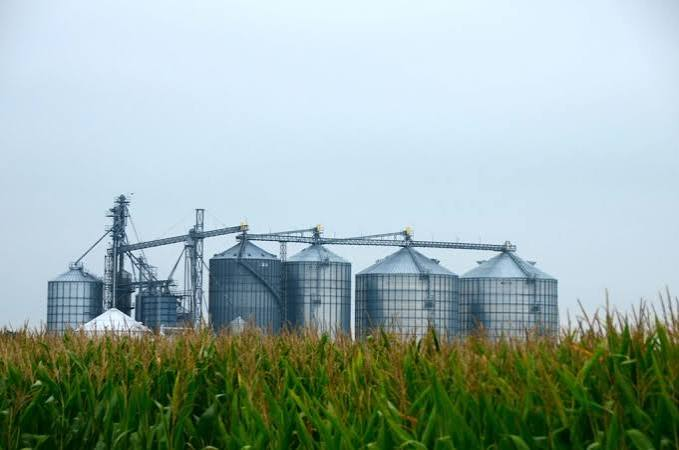
One thing I've realized from working on my family's farm over the past couple of years is that almost all the heavy machinery runs on diesel. Tractors, trucks, and every machine that gets a crop in or out of the field burn through it. So when diesel prices nearly doubled this year, I knew right away what it meant for farms like ours. Every farm in the country is facing the same math right now, and for many, it doesn't work.
Wall Street spent October focused on tech stocks. But one of the clearest stories in the economy right now plays out in fields: farmers are caught between record input costs and crop prices that haven't risen to match them.
From the Strait of Hormuz to the Grain Cart
The chain starts overseas. The Iran war and the closure of the Strait of Hormuz, a key shipping route for diesel, gasoline, and jet fuel, sent fuel prices sharply higher. Brent crude closed October at $117.64 a barrel, up 13.6% for the month.
The first hit is diesel, which runs nearly every field operation: planting, spraying, and harvest. The average farm diesel price hit $5.75 a gallon on October 2, up from $3.02 a year earlier. This is the worst possible timing, as harvest is the most fuel-hungry stretch of the year. Since the shock came fast, many farmers hadn't locked in lower fuel prices ahead of time.
Fertilizer is the second hit. Natural gas and energy feed directly into fertilizer production, and DTN reports all eight major fertilizer products cost more than a year ago, with anhydrous ammonia up 20%. USDA projects farmers will spend a record $40 billion on fertilizer and $22 billion on fuel in 2026, each up about $5 billion from last year.
Fertilizer and fuel are priced on global markets, so when supply shrinks anywhere, prices rise everywhere. That's why a farm thousands of miles from the Persian Gulf still pays for a shipping lane closing there.
Costs Up, Prices Flat
Higher costs alone wouldn't be a crisis if farmers could pass them on, but in reality they can't. Farmers are price takers: corn and soybeans sell for whatever the global market pays, and crop prices haven't kept pace with production costs. A manufacturer facing higher costs can raise prices, whereas a farmer just has to absorb them.
The data backs this up: the USDA raised its 2026 production expense forecast by $15.1 billion since February, to $492.8 billion. Net farm income is expected to fall 2.6% this year, or 5.5% after inflation. The Farm Bureau estimates the Hormuz closures add about $19 per acre in diesel and $7 in fertilizer for corn growers.
This is not a one-year problem. In Iowa, a Farm Bureau report found farm incomes fell 54% from 2022 to 2024, before fuel prices spiked. The oil shock hit an industry that was already several years into a downturn.
Figure 1. Commodity Market Responses to the Strait of Hormuz Closure (February 27 – March 17, 2026). Source: NDSU using data from Bloomberg.
Cotton +8.1% · Soybean Oil +7.5% · HRW Wheat +5.9% · Natural Gas +5.8% · Corn +3.6% · Heating Oil +50.4% · Gasoline RBOB +50.3% · WTI Crude Oil +42.8% · Brent Crude Oil +42.2% · S&P 500 VIX +11.7% · Dollar Index +2.0% · Soybeans -0.1% · S&P 500 -2.2% · Dow Jones -4.0% · Gold -4.6% · Silver -14.2%
After the Strait of Hormuz closed, energy prices soared while crop prices barely moved.
Help That Arrives After the Bills
The federal government is stepping in. Direct government payments to farmers are forecast to reach $47.4 billion in 2026, nearly 70% more than in 2025. Additionally, the administration's $8 billion in diesel aid is set to go out after the November 3 election, and Congress is working on another round.
The aid helps farms make it through the season, but it doesn't change the underlying math. Payments arrive after the costs are already paid, and they don't lower next year's fuel or fertilizer bills. Farmers in Iowa say federal aid isn't keeping up with costs. There is also a bigger risk: the more a sector depends on emergency payments, the more its profitability becomes a policy decision rather than a market outcome.
Why It Matters Beyond the Farm
The squeeze doesn't stop at the farm; it triggers a chain reaction across the rest of the economy. Diesel powers the trucks that move grain, and shipping rates are now nearly triple their normal level. Those costs eventually show up in grocery prices, adding to already high inflation. The squeeze also hurts the companies that sell to farmers. When farm profits disappear, farmers put off buying a new combine, and equipment makers like Deere feel it in their sales as well.
My Take
The oil shock is usually discussed in terms of gas prices and inflation prints. On the farm, it's simpler: you either pay whatever diesel costs or leave the crop in the field and lose the whole year's investment, which isn't much of a choice.
Large operations can buy inputs in bulk, hedge fuel, and ride out a bad year. Smaller family farms have far less cushion. Aid can buy time, but unless energy prices come down, the farms that make it through 2027 will be bigger and fewer.