
Markets
How the 2026 Midterms Could Shape the Market
Investors will be watching the elections very carefully — whichever party gains control of Congress will be able to put their stamp on America's economy.
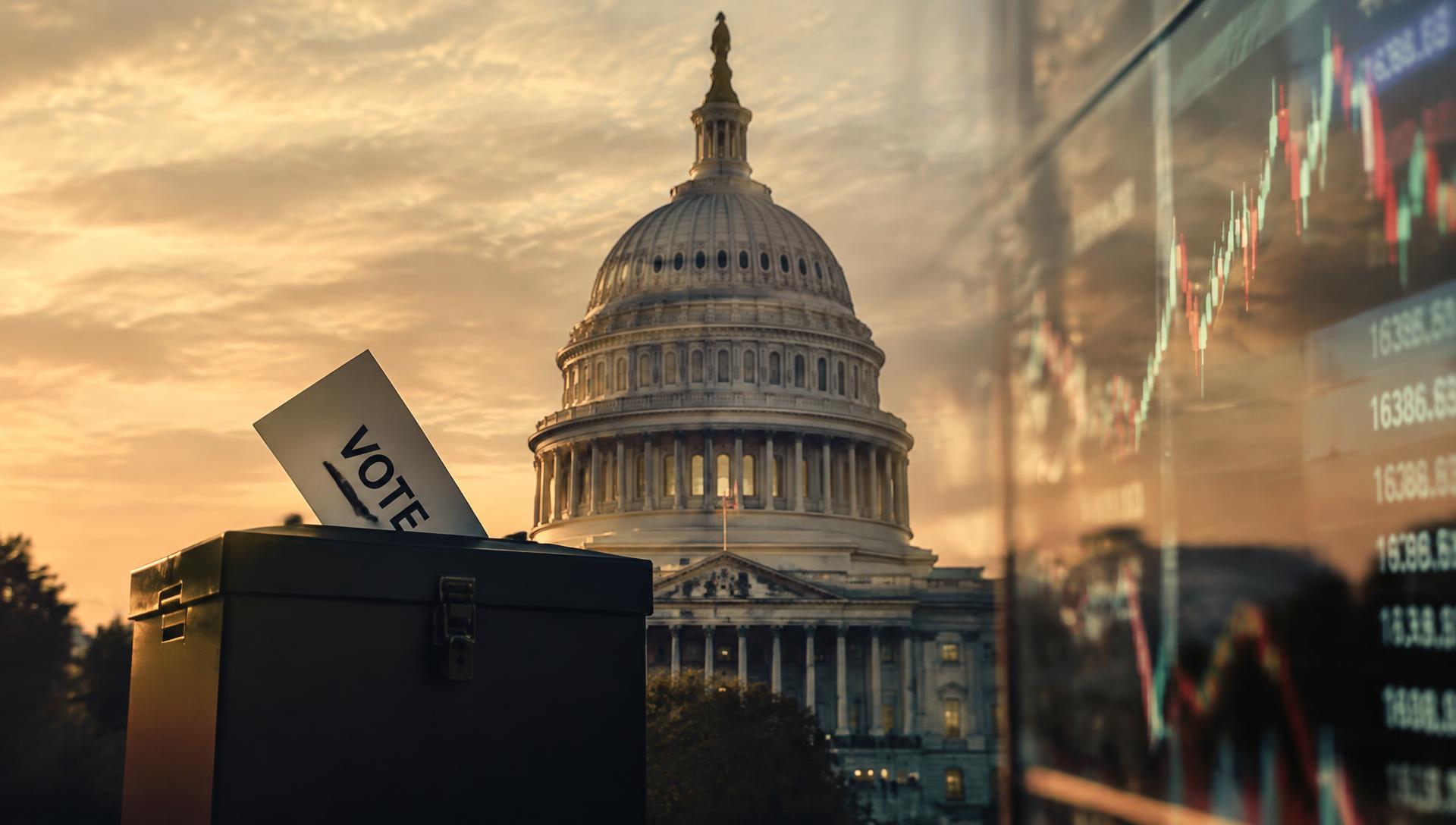
On November 3rd, polls will open for the 2026 midterm elections as millions of Americans vote to determine which party will control congress for the remaining two years of President Donald Trump's second term. These elections will help determine the political direction America is going to take over the next two years, but their influence won't only stop in Washington.
Investors will be watching the elections very carefully. Influence over government spending and corporate regulations will also be up for grabs during the elections, and whichever part gains control of Congress will be able to put their stamp on America's economy.
The S&P 500 is up approximately 39% since Donald Trump was re-elected on November 5th, 2024. Significant investment in artificial intelligence along with strong corporate earnings has been vital to this bull market. However, there are many uncertainties surrounding the future of the market, and many believe that if there is a change in power after the midterm elections, we might expect to see a different approach to economic policy. The U.S. annual inflation rate is 3.7%, which is significantly higher than the Federal Reserve's long term target rate of 2%. The Federal Reserve recently hiked rates by 0.25 percentage points on September 16 to 3.75%-4%, and at its next meeting, the Fed decided to keep rates at 3.75%-4% on October 28. With these higher interest rates borrowing costs are higher for consumers, potentially decreasing the amount of economic output, and stock market gains.
Additionally, conflicts in the Middle East, and the ongoing war between Russia and Ukraine continue to influence investor expectations. Following the midterm elections, investors will be considering how the results could influence U.S. policy will determine these ongoing conflicts, and ultimately play a factor in the markets.
Artificial Intelligence and the Technology Sector
One of the main concerns for the future of the markets is the rapid growth of artificial intelligence.
Major tech companies such as Nvidia, Amazon, Microsoft, and Alphabet have been the beneficiaries of growing demand for AI technology and infrastructure. Conversely, there are several concerns if the spending on these technologies can be justified in the long run, and if the investments will end up paying off.
There is a lot of uncertainty surrounding the upcoming midterm elections, and if Donald Trump's Republican Party continues to hold power in Congress, many believe it could become easier for the administration to fund the growth of artificial intelligence. Additionally, they could have the ability to pursue AI development through deregulation and the expansion of infrastructure.
However, if the democratic party takes control of one or both chambers of Congress, many tech companies could face an increase in oversight from Congress. Lawmakers may pursue regulations on environmental consequences and electricity consumption regarding data centers.
According to Morgan Stanley, the development and growth of AI infrastructure has been an increasing political issue. Specifically, how state and local governments will consider the effects that AI infrastructure has on electrical consumption and surrounding communities. They also believe there will be an enormous amount of investment in AI infrastructure in 2027, projecting $1.5 trillion dollars in capital expenditures by cloud computing companies. The results of the midterms have the ability to greatly affect the expansion of AI infrastructure, due to possible restrictions that have the ability to increase costs and potentially delay expansion, ultimately affecting the amount of spending into AI infrastructure and future earnings.
Middle Eastern Conflicts and Oil Prices
The ongoing conflict between the United States, Israel, and Iran has had a massive impact on the financial markets since the U.S. and Israel launched a joint airstrike on February 28th 2026. The conflict has disrupted global energy markets, leading to increases in oil prices and inflation.
Following rising oil prices, businesses have higher costs for production and transportation, ultimately making the prices of items more expensive and affecting consumers.
Additionally, the Federal Reserve doesn't have the same ability to lower interest rates because of the higher prices that contribute to inflation. As a result, investors may become less optimistic about future earnings, ultimately putting downward pressure on certain stocks, especially the ones that rely heavily on fuel.
However, November 2nd came with a significant development in global energy markets.
According to Reuters, republished by Euronext, the price of Brent crude oil dropped 7%, following discussions between Iranian and Qatari officials that raised hope for an agreement to stop the ongoing conflict. The price of oil per barrel fell to approximately $105, portraying the optimism that these disruptions to global oil supplies could be reduced.
The possibility of change in congressional authority gives the U.S. administration to approach the middle eastern conflicts differently. With a democratically controlled chamber, there will likely be an increase in oversight over President Trump's foreign policies. However, with continued republican influence there is an increased chance that there will be more political support for the ongoing approach.
Ultimately, the future of overseas negotiations is all speculation, and although Congress might have an impact in the middle east they don't have direct control over ongoing or future developments.
The War in Ukraine and Its Economic Consequences
Another uncertainty for the financial markets is the ongoing war between Russia and Ukraine. More specifically, its effects on energy prices, trade, and government spending.
Russia remains a major global energy producer, meaning sanctions and restrictions on Russian exports can influence international oil prices. On October 9, President Trump got rid of a number of current sanctions imposed, and announced an agreement for Russia to increase diesel supplies to American and global markets. According to the Council on Foreign Relations, the agreement temporarily eased certain sanctions on Russian diesel exports in an effort to increase energy supplies and reduce fuel costs.
However, the agreement has also raised concerns about weakening economic pressure on Russia. Increased energy exports could provide additional revenue to the Russian government, potentially undermining sanctions intended to encourage an end to the war.
The midterm elections could influence future debates surrounding sanctions, military assistance to Ukraine, and federal defense spending.
For investors, these decisions could affect energy companies and defense contractors. Increased defense spending could benefit companies supplying military equipment, while changes in sanctions could influence global energy prices.
However, much of American foreign policy remains under presidential authority, meaning a change in congressional control would not necessarily produce an immediate shift in the administration's approach to the conflict.
Looking Ahead
As Americans prepare to vote, there is much more that meets the eye than just what party gains political control. AI development, international conflicts, and economic regulation are all up for grabs, and have the ability to shape the future of the United States economy.
The midterms have the ability to create market volatility in the short run, but over time factors like regulations on AI infrastructure, and conflicts in Iran and Ukraine have the ability to change the markets in the long run.
Ultimately, the midterms will give Americans a better idea on how the U.S. government will respond to these challenges, but it will not resolve them. From an economic standpoint, the most important question may not be which party controls Congress, but how the next two years of economic and foreign policy will shape the financial markets.