Markets
Full Books: Wall Street’s Lenders Are Getting Cold Feet on AI
The AI boom runs on borrowed money. After a $2.5 trillion sell-off, the people lending it are starting to hesitate.

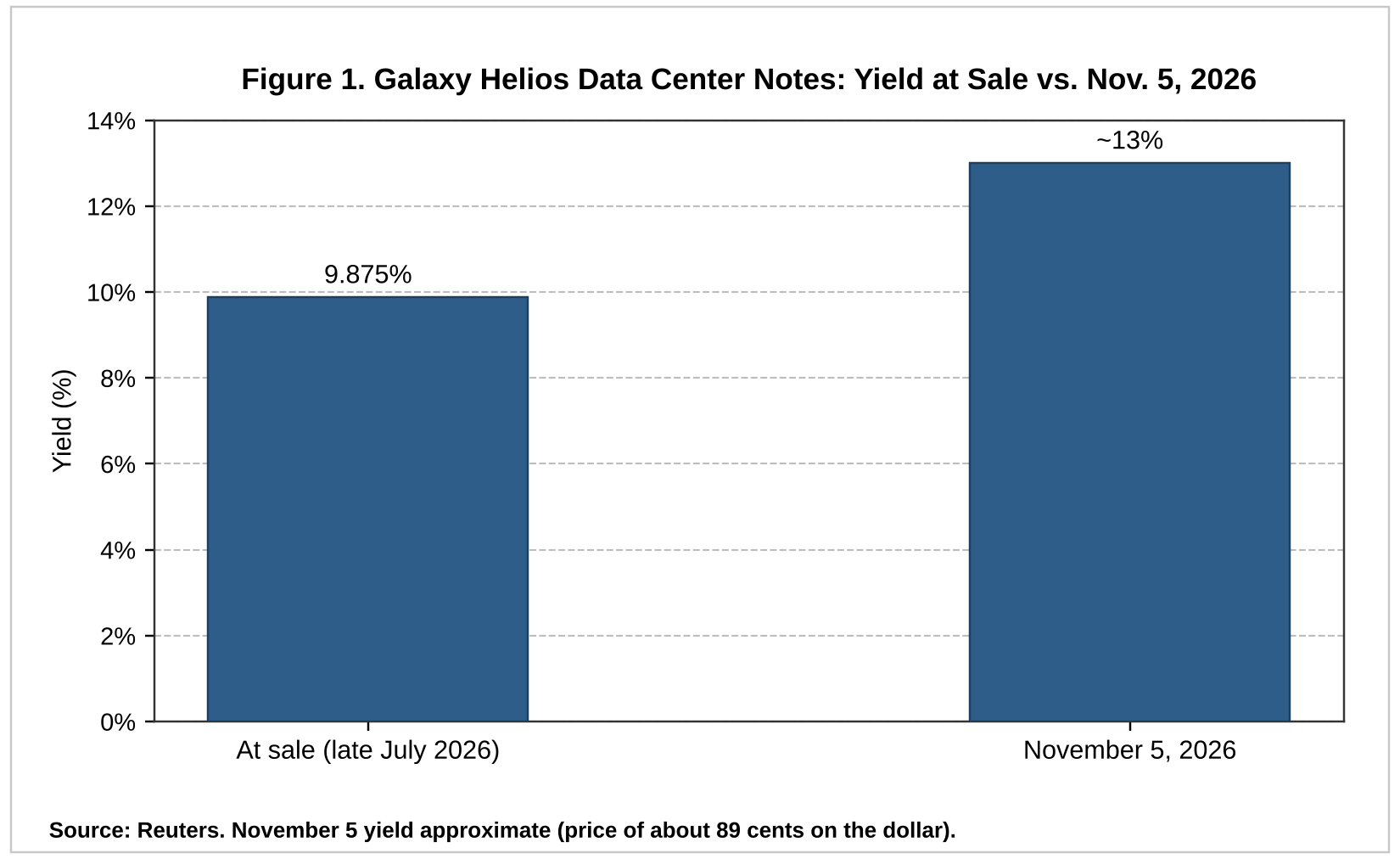
Investors now demand about 3 percentage points more to hold the same data center bonds they bought in July. Source: Reuters
For most of this year, the hard part of building an AI data center was getting the chips and the electricity. Money was the easy part. Banks, bond buyers and private credit funds lined up to lend to almost anyone pouring concrete for a server farm.
That changed in about a week. After the November 5 sell-off, which erased roughly $2.5 trillion in market value from the Nasdaq 100, some banks started telling market participants they would be reluctant to finance new AI deals, Reuters reported. A few hesitated even when the loans were backstopped by names like Google and Anthropic, the company that just filed to go public.
Stock prices get the headlines, and stocks can bounce back in an afternoon. Lending decisions move slower, and they tend to stick. If the people funding the buildout are pulling back, that matters more than any single bad day for Nvidia.
Who Pays for a Data Center
The biggest tech companies have plenty of cash, but not enough for what they’re planning. Hyperscaler spending on AI is projected to pass $1 trillion a year by 2027, according to Bloomberg, and Goldman Sachs expects those companies to issue about $420 billion of debt that year, more than 60% above its estimate for 2026.
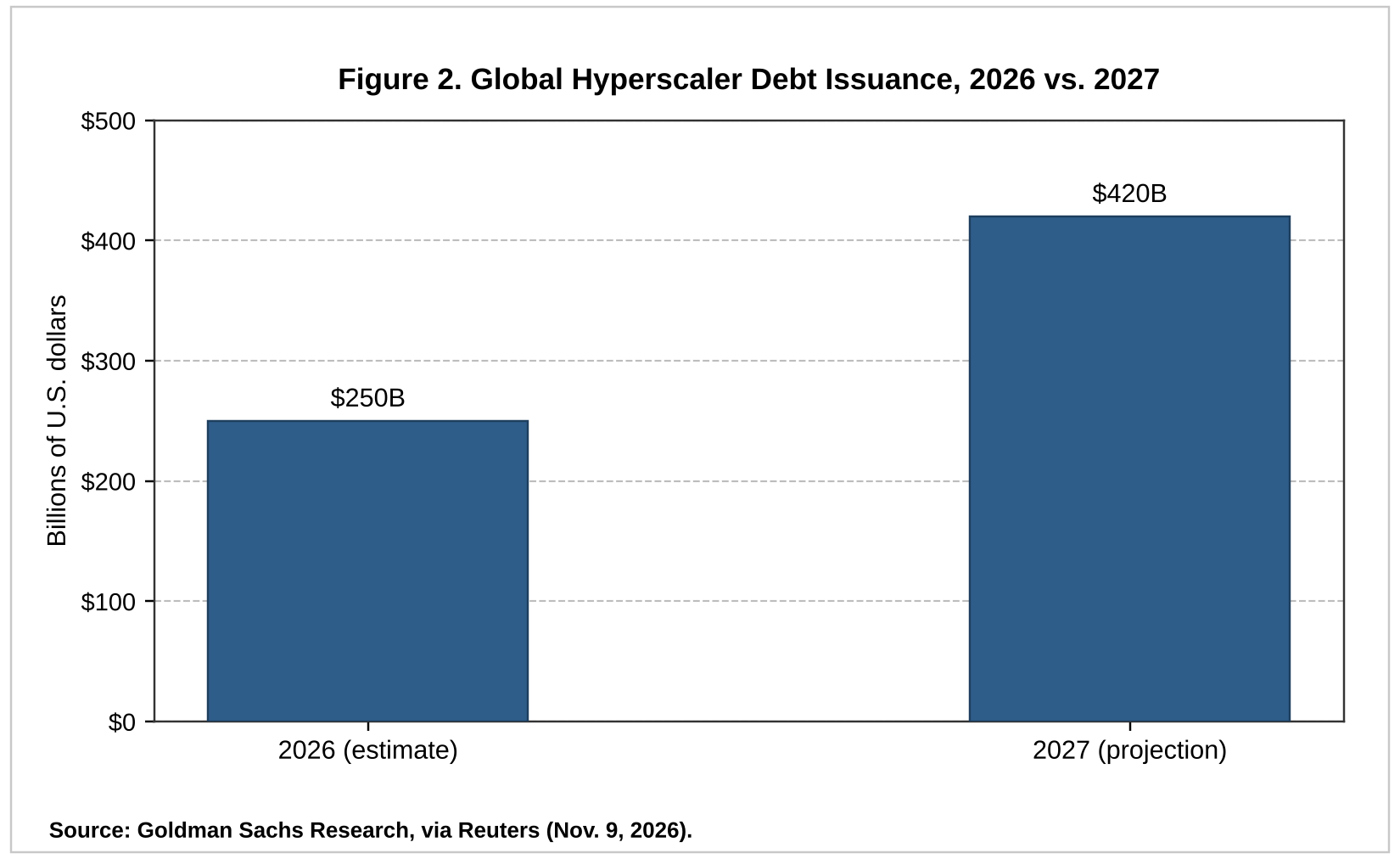
Goldman Sachs expects Big Tech’s borrowing to rise by roughly $170 billion in a single year. Source: Goldman Sachs Research, via Reuters
Below the giants sits a riskier layer of borrowers. These include “neoclouds” like CoreWeave, which rent out computing power to AI developers, along with standalone data center builders. Many of them borrow through private credit, meaning loans negotiated directly with funds such as Blackstone or Blue Owl instead of through a bank or the public bond market.
The deals are often stacked on promises from bigger companies. According to Reuters, chipmakers typically backstop the senior debt used to buy the chips and guarantee payments on the long-term data center lease. On paper that makes the loans look safe. In practice it ties a lot of separate loans to the same handful of companies.
What Changed
The trigger was a rough first week of November. On Thursday the 5th, the S&P 500 fell 4.4%, its worst day since the 2025 tariff shock, and Nvidia dropped 9.3%, the AP reported. The midterm results added another worry. Voters in both parties have soured on data centers that push up local power bills, and lenders now see a real chance of tighter oversight.
“Debt investors’ books have become full,” Chris Poggi, a finance partner at Ropes & Gray, told Reuters. Put simply, lenders who spent the past year saying yes are now asking how much more AI exposure they can stomach. Several are stress-testing borrowers’ cash flows against a downturn and reading contracts more closely, including the clauses that let a tenant scale back its commitment.
Where the Stress Shows Up
The clearest signal is in bond prices. Galaxy Helios Data Center sold notes in late July with a 9.875% coupon. By November 5 they had fallen to about 89 cents on the dollar, pushing the yield to around 13%, per Reuters data cited by Finimize. The extra yield investors demand on U.S. junk bonds widened to 348 basis points during the sell-off.
CoreWeave is the name everyone is watching. It carries roughly $50 billion of debt, according to LSEG data cited by Reuters, which makes it one of the largest borrowers tied to private credit’s data center push. Its borrowing costs have climbed toward distressed levels.
There is also a test coming this week. Bloomberg reported that about $500 million of data center loans are up for auction, with bids due November 19. Whatever buyers pay will be the first hard number on what this debt is actually worth once someone tries to sell it.
The strange part is that private credit has never had more money to lend. Direct-lending funds raised about $129 billion in the first nine months of 2026, up 35% from a year earlier, according to Prequin. So the problem isn’t a shortage of cash. Lenders are reconsidering how much of their portfolio should ride on one industry.
Why the Risk Is Hard to See
Much of the exposure never shows up on the balance sheets of the companies driving demand. The Wall Street Journal estimated in August that off-balance-sheet commitments tied to AI infrastructure, things like leases and residual-value guarantees, total around $3 trillion.
That creates a tangle. One pension fund could own a hyperscaler’s bonds, the debt on a data center leased to that hyperscaler, and a stake in a private credit fund lending against the chips inside the building, all without realizing it has made the same bet three times. The Chicago Fed has pointed out that banks also lend to the private credit firms funding these projects, so trouble at a single data center can travel back to the banking system indirectly.
Interest rates make it harder. The Fed raised rates in September for the first time since 2023, and after a hotter-than-expected October inflation report, all 101 economists in a Reuters poll expect another hike in December. A project that only works with cheap money looks worse with every quarter point.
What to Watch
Two dates matter. On Tuesday, November 17, Nvidia reports earnings after the close, and options traders are pricing in a move of roughly 10% in either direction. Nvidia’s outlook tells lenders whether its customers are still ordering at the pace the debt assumes. Two days later come the bids on the loan auction.
My Take
Most coverage of this sell-off has been about Nvidia’s stock price. To me the more important signal is quieter. The people who actually write the checks are starting to ask harder questions, and lenders don’t change their minds as fast as stock traders do.
I don’t think the AI buildout is over. Microsoft, Alphabet and Amazon can still borrow cheaply, and they’ll keep spending. The risk sits at the edges, with younger, heavily indebted companies like CoreWeave whose whole model depends on money staying cheap and easy to find. For two years lenders assumed it would. If Thursday’s loan auction clears well below face value, I’d read that as the first real sign the weakest borrowers are about to get squeezed.